Counteract Brain Aging with a mix of Nutrients and Other Non-traditional Thought of Ingredients
Chris Meletis ND
The aging of populations worldwide is increasing the number of people at high risk of cognitive decline. Poor cognitive health during aging is responsible for the loss of independence and much heartbreak and stress to the loved ones of the affected individuals. In younger people, maintaining memory, attention, and focus is important to completing daily tasks and being productive.
Neuroinflammation plays a prominent role in cognitive decline during aging. The activation of central nervous system cells, known as microglia, is a key player in neuroinflammation, and this process is involved in brain aging.1 An impaired gut-brain axis is also implicated in poor cognitive function, and dysfunctions in this axis can trigger neuroinflammation in the brain.2 Mitochondrial health is also closely tied to neurological health during aging.
Addressing each of these factors—supporting natural inflammatory responses in the brain, maintaining the health of the gut-brain axis, and promoting mitochondrial health—offers a highly effective approach to supporting cognitive function.
The Endocannabinoid System and Neuroinflammation
The endocannabinoid system refers in part to cannabinoids produced within the body (endocannabinoids), neurotransmitters that bind to cannabinoid receptors 1 and 2 (CB1 and CB2), thus regulating many aspects of health. Endocannabinoids perform many roles in the central nervous system, including regulating neuroinflammation and neurogenesis, as well as regulating synaptic plasticity and the stress response.3,4 If the endocannabinoid system isn’t working properly, it can contribute to cognitive decline during aging.
Endocannabinoids have a broad spectrum of activity, which is advantageous in neurodegenerative diseases where a combination of different factors, including protein misfolding, neuroinflammation, excitotoxicity, oxidative stress, and mitochondrial dysfunction, causes neural dysfunction.4 CB2 receptors also are neuroprotective by suppressing inflammation.5
The Endocannabinoid System and the Gut-Brain Axis
The gut-brain axis is the two-way interaction between the gut and the brain. The gut microbiota can influence behavior and cognition, and the central nervous system can play a role in the gut microbiota composition. A “leaky gut” can lead to a “leaky brain.” The endocannabinoid system plays a role in this interaction between the gut and the brain, and maintaining a healthy endocannabinoid system is known to support a natural inflammatory response in the gut.6
Supporting Brain Health Through the Endocannabinoid System
Phytocannabinoids like cannabidiol (CBD) may partially exert their brain health benefits through their actions on the endocannabinoid system and the gut-brain axis. For example, in animal models of colitis, CBD reduced pro-inflammatory cytokines.7
CBD also supports a healthy inflammatory response in the brain by blocking microglia activation.8 Clinical and preclinical studies show it can support the health of people with neurological disorders such as epilepsy, multiple sclerosis, ischemic brain injuries, neuropathic pain, schizophrenia, and Alzheimer’s disease.9 Preclinical studies show that CBD has powerful inhibitory effects against neurotoxic molecules and inflammatory modulators, suggesting it may have the potential to support neurological health.9
Being under stress is known to impact brain health, and studies have shown CBD calms stress. Ongoing administration of CBD in mice undergoing long-term unpredictable stress improved their mood and reduced their anxiousness. In humans, researchers looked at how CBD affected people participating in a simulated public speaking test. Several studies like this have been performed on people with disorders that made them more susceptible to the effects of stress. Every study found that CBD calmed the subjects and reduced their stress before and during the speech.10-12
CBD with Enhanced Absorption.
CBD is traditionally not an easy ingredient to absorb into the body. However, CBD with VESIsorb® technology, uses a patented, clinically proven delivery system that dramatically increases bioavailability. CBD with the VESIsorb® technology, which provides unmatched effectiveness compared to other CBD oils; This type of delivery system improves shelf life and stability.
Promoting Other Mechanisms of Brain Health
In addition to CBD, additional ingredients with brain-boosting abilities can complement the CBD’s actions. Powerful ingredients to look for include:
- DHA – DHA supplementation enhanced memory and reaction time in healthy young adults eating a low-DHA diet.13 A systematic review and meta-analysis found that DHA, alone or together with EPA, supported healthy memory function in older adults with mild, age-related memory problems.14
- Phosphatidylserine – Phosphatidylserine (PS) is a phospholipid that can support brain health during aging. It plays a critical role in nerve cell membranes and myelin health.15 Supplementation with PS slows down, stops, or reverses age-related changes in nerve cells.15 PS is involved in aspects of cognitive function such as forming short-term memory and consolidating long-term memory and attention, focus, and concentration.15
- Phosphatidylcholine (PC) – The brain uses PC to make acetylcholine,16 a neurotransmitter critical for normal parasympathetic function. A 2014 study found that levels of PC in humans are related to cognitive health during aging.17
- Curcumin – This component of turmeric increases levels of brain-derived neurotrophic factor (BDNF). This brain hormone is critical in neuronal health and plasticity and promotes learning and memory.18 Curcumin supports a healthy inflammatory response, is an antioxidant, and has neuroprotective properties.19,20 Bioavailable curcumin given to mentally healthy seniors maintains age-related memory and attention and decreases the buildup of amyloid and tau in brain areas regulating mood and memory. 19 This study noted a 28% improvement in memory tests in participants taking the curcumin.19
- Coenzyme Q10 – Mitochondrial health is closely tied to neurological health during aging. Because coenzyme Q10 (CoQ10) is critical for normal mitochondrial function and energy production, it is an important but often overlooked nutrient in brain health21 and is neuroprotective.22 The importance of the bioavailability of difficult-to-absorb ingredients like CoQ10 is often an afterthought; the VESIsorb® delivery system enhances the bioavailability of CoQ10 (more on this later).
- Quercetin – A flavonoid known to support a healthy inflammatory response, quercetin is useful as a neuroprotective agent.23 Neuroinflammation promotes premature neuronal aging, and reducing inflammation in the brain contributes to neuronal health. Quercetin’s beneficial actions are due in part to its acting on microglial cells of the central nervous system.23 It readily crosses the blood-brain barrier24 and protects neurons from oxidative stress, indicating it may support cognitive performance.25
- Gamma tocopherols – A component of vitamin E, gamma-tocopherols inhibits reactive nitrogen oxides, ameliorating the loss of vitamin C that occurs in the plasma due to inflammation.26
- Palm tocotrienols – Another component of the vitamin E family, tocotrienols are neuroprotective. Research indicates that palm tocotrienols protect against white matter lesions in the brain.27
Bioavailability of Ingredients is of Utmost Importance –
Many of these cognitive-supporting nutrients are not well-absorbed by the body. Their bioavailability must be enhanced to have optimized support on brain function and the brain’s natural inflammatory responses. Consequently, many cognitive-fortifying nutrients mentioned above don’t have enhance absorption. The VESIsorb® delivery system ensures optimal bioavailability of traditionally difficult-to-absorb nutrients (especially those essential to brain health).
This delivery system delivers significantly higher blood plasma levels using a reduced dose. For example, a study of 20 healthy male and female participants compared a CoQ10 formulation using VESIsorb® with three other commercial preparations.28 The study found that the CoQ10 powered by VESIsorb® resulted in significantly enhanced enteral absorption and bioavailability.28 This delivery system accelerates CoQ10’s absorption without having to worry about its fat-soluble properties and having to consume it with food.
Can a Multivitamin Support Cognitive Performance?
We must look at multivitamins to get the full picture of cognitive support supplements. Vitamins and minerals are essential in energy production in the body, DNA synthesis, oxygen transport, and neuronal functions, making them critical for brain health and cognition. B vitamins and vitamins C and E are consistently linked to a protective role in brain aging.29
Research backs up the role of multivitamins in cognitive function. A systematic review and meta-analysis found that multivitamins enhanced immediate free recall memory.30 Other research found that compared with placebo, multivitamins improve memory in older adults.31 Another recent meta-analysis of three randomized trials concluded that taking a daily multivitamin/mineral leads to improved global cognition and episodic memory.32
The key is to supplement with a superior-quality multivitamin, formulated with active forms of vitamins such as MTHF. A lot of people have a genetic polymorphism that prevents them from metabolizing folate. Supplementing with the active form of folate (MTHF) overcomes this polymorphism and allows the body to use folate effectively.
Folate and vitamins B6 and B12 are critical to keeping homocysteine levels balanced. Research indicates elevated homocysteine is linked to cognitive decline and cerebral atrophy.33 Furthermore, high homocysteine predicts the subsequent development of dementia in cognitively healthy middle-aged and elderly individuals.33
Vitamin D + Multivitamin = Exceptional Wellness
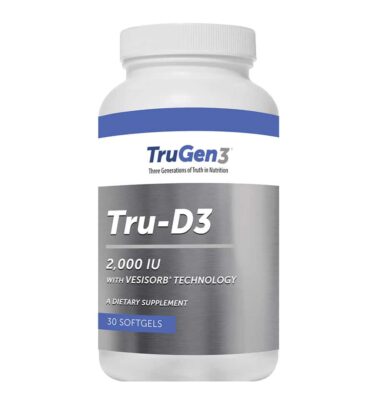
In my clinical experience, I have found that taking additional vitamin D beyond that found in a multivitamin can yield excellent results in many aspects of health, including cognitive function. Although vitamin D is produced in the skin after sun exposure, too many factors deplete its production, including too much time spent indoors, suntan lotion use, and reduced production during aging. It often takes targeted vitamin D supplementation above the amount typically found in a multivitamin to help achieve optimal vitamin D levels. Here is a glimpse of the research on vitamin D:
Cognitive Function
A seven-year follow-up study of 498 older women with the risk of Alzheimer’s disease (AD) demonstrated that higher vitamin D dietary intake was associated with a lower risk of developing AD.34
Cardiovascular Mortality
A meta-analysis of 73 prospective cohort studies found that individuals with the lowest levels of serum 25-hydroxyvitamin D, a measure of vitamin D in the blood, had higher risks of all-cause mortality (35% higher), mortality due to cardiovascular disease (35% higher), and mortality due to cancer (14% higher) compared to those with the highest levels.35
Risk of Falling
Seven observational studies in 840 elderly fallers and 1,330 non-fallers found significantly lower serum 25-hydroxyvitamin D concentrations in fallers than in non-fallers.36
Hypertension Risk
Meta-analysis of seven prospective studies, including a total of 48,633 participants with nearly 5,000 incident hypertension cases, found a 30% lower risk of hypertension in those in the top versus bottom tertiles of serum 25-hydroxyvitamin D concentrations.37
Coronary Artery Blood Flow
In a cross-sectional study of healthy patients who underwent coronary angiography, serum 25-hydroxyvitamin D concentrations <30 ng/mL were associated with poorer coronary flow rates.38